An uncle almost the same age
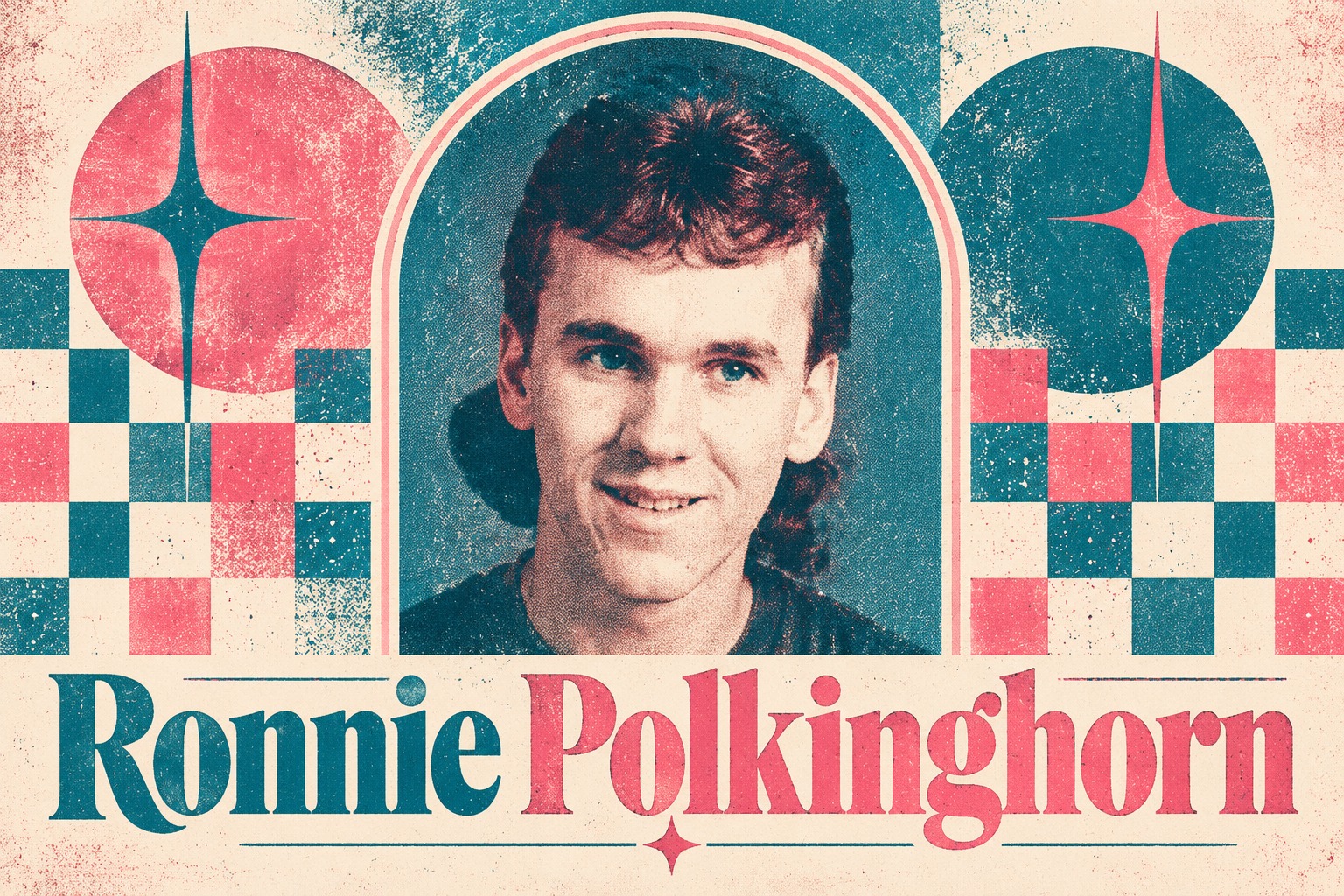
Ronnie Polkinghorn was born Ronald Dean Polkingharn on July 27, 1972, in St. Joseph, Missouri. He is remembered principally as the maternal uncle of Eminem, whose birth followed on October 17 of the same year. The small age difference made their relationship unlike the usual image of an adult uncle and young nephew.
I find that timing the key to Ronnie’s place in the family story. The two boys were relatives, but they were also peers. They grew up close enough in age to share interests and experiment with music together. Ronnie’s influence belongs to the years before Marshall Mathers became a widely known recording artist.
Ronald and Betty
Ronnie’s parents were Ronald Dewey Polkingharn and Betty Joy Hixson, later known as Betty Kresin Hillsman. His father was born in Iowa in 1939 and died in San Diego in January 1987. Ronnie was 14 at the time of his father’s death.
Betty was born in Highland, Kansas, in 1938. Her later life included time in Michigan and Missouri, study at local colleges and work in settings ranging from a hospital to real estate and the courthouse collectors’ office. She also participated in local political life. Her family included children from more than one relationship, which explains the different surnames appearing among Ronnie’s siblings.
I see Betty as the central link between Ronnie and Eminem. She was Ronnie’s mother and Eminem’s grandmother. That generational relationship remained intact even though her son and grandson were born only months apart. Their closeness in age did not change the family tree, but it changed the everyday possibilities of the relationship.
Debbie and the wider sibling group
Debbie Nelson, Eminem’s mother, was Ronnie’s older half sister. Born in 1955, she was considerably older than him. She married Marshall Bruce Mathers Jr., and their son became the artist known as Eminem. Debbie later also had Nathan Mathers, Eminem’s younger half brother and another of Ronnie’s nephews.
The wider family included Todd Nelson, Steven Nelson, Tanya DeWeese and Betti Gilpin Schmitt. These names show a blended sibling group extending beyond the relative whose music career made the family publicly recognizable. Ronnie’s story belongs within that larger household history, not only within a celebrity biography.
Debbie died in December 2024, and Betty died in March 2026. Their deaths occurred decades after Ronnie’s. I keep the chronology clear because modern remembrances of the family can mention several losses together, even though each took place at a different stage in the lives of the surviving relatives.
Missouri Detroit and shared teenage interests
Ronnie grew up in the St. Joseph area. Eminem spent time there and continued seeing him during visits after moving with Debbie to the Detroit area. The Missouri and Michigan connection gives their friendship a geographical pattern as well as a family one.
They recorded informal rap tapes together as young people. Those homemade recordings belong to a period of experimentation, before Eminem’s commercial career. They do not establish a separate professional recording career for Ronnie, but they are concrete evidence of shared musical activity.
I find the distinction between private practice and a commercial release useful. Two young relatives making tapes were participating in music together. Later fame can make those early experiments seem like inevitable steps toward success, but the known facts simply show a friendship in which rap had become an important interest.
Introducing Marshall to hip hop
Ronnie is credited with introducing Eminem to hip hop through the Breakin’ soundtrack. Ice T’s Reckless is identified as the first rap song Eminem recalled hearing. That moment is part of the musical origin story associated with his nephew’s later career.
A soundtrack can act as a doorway into a new form of music. I think that is the useful metaphor here: Ronnie helped open a door, while Marshall’s later work was his own. Sharing music with a friend or relative is a real influence without making the person who shared it responsible for every subsequent artistic decision.
Their age proximity also makes the exchange easy to understand. Ronnie was not presenting a formal lesson from an older generation. He was sharing music as a companion. The relationship combined the family title of uncle with the closeness of someone growing up at nearly the same time.
His death in 1991
Ronnie died on December 14, 1991, at 19. His death was ruled a suicide. The known history places his life and death in the St. Joseph family context, with some variations in later descriptions of location. He is buried at Saint Joseph Memorial Park.
The fact of the loss and his age are sufficient for the biography. He died before the adult working life or public career that might otherwise have given his story an independent professional chronology.
Eminem was deeply affected by Ronnie’s death and later commemorated him through a tattoo and references in his public work. The loss remained part of the artist’s account of his family history. Ronnie himself did not live to see the major public success that followed for his nephew.
Memory within Eminem’s career
As Eminem became famous, Ronnie’s name appeared in interviews, biographical accounts and discussions of songs. Old recordings made by the two also became a subject of attention, although proposed public use of some material met family objections. The homemade tapes remained part of a personal history rather than a straightforward commercial catalog.
The song Stan is sometimes discussed near Ronnie’s story because it includes references to Eminem’s life. Its central character and narrative are fictional. I think that distinction is particularly important in a family biography: a real relative’s death should not be used to turn a fictional song into an account of events that happened to him.
Ronnie’s remembered role is specific. He was a close young relative, a companion in early rap experiments and the person associated with an introduction to hip hop. Those details describe his influence more precisely than assigning him titles, earnings or professional achievements that his brief life did not establish.
FAQ
Why was Ronnie both Eminem’s uncle and his peer?
Ronnie was the younger son of Eminem’s grandmother Betty, while Eminem was the son of Ronnie’s older half sister Debbie. Ronnie was born in July 1972 and Eminem in October 1972. Their family positions were therefore different generations, but their ages made them companions growing up at nearly the same time.
What musical influence did Ronnie have?
He is credited with introducing Eminem to hip hop through the Breakin’ soundtrack, including Ice T’s Reckless. The two also made informal rap tapes together. This places Ronnie within Eminem’s early musical experience without establishing a separate commercial recording career or making him a producer of later albums.
Is Stan the story of Ronnie’s death?
No. Stan presents a fictional fan and an invented narrative. Ronnie was a real member of Eminem’s family who died in 1991. References to the artist’s life within a song should be distinguished from the fictional central plot, rather than treated as a documentary account of Ronnie’s experiences.